
CONTRIBUTORS

Richard Surrency
Head of Private Markets and Alternatives APAC Franklin Templeton
“As liquid credit strategies struggle to source for yield, private debt asset class may supplement investor’s traditional credit portfolio, and at the same time, may offer diversification and a risk-adjusted source of long-term income.”
2020 was an unprecedented period of global turmoil as the world was forced to adapt to a universal healthcare crisis and governments responded with extraordinary monetary policies devised to save global economies. In March 2020, few investors would have speculated that financial markets would end 2020 on such a positive note, but investors have begun to reassess market conditions and reflect on emerging opportunities and risks as we move into 2021.
The unprecedented monetary support for markets in 2020 has left liquid credit classes at record low yields, forcing investors to consider alternative asset classes in search of yield while concerns over valuations in equity markets continue to make investors nervous. The spectre of inflation also hangs over markets as economic growth improves, although unlikely to rise too far too fast to alter highly accommodative central bank policy positioning. Momentum in US and Chinese economies is improving as vaccination programs are implemented on a broad scale, but Europe continues to battle with a second wave of COVID-19 that has forced many of their economies back into lockdown. Thus, while there are reasons for a positive outlook, global economies are only just stepping into a post-pandemic recovery.
Investors dependent on dividends as a reliable source of income saw their returns fall throughout 2020 as companies moved towards more conservative dividend pay-out policies to conserve cash and improve balance sheets as they adjusted to pandemic conditions. An analysis of 2020 dividend pay-outs by the world’s biggest firms indicated a fall of 17.5–20%, equivalent to USD 263 billion, in response to the pandemic1. To protect against this loss in income, investors that can take a longer-term view are increasing portfolio allocations in alternatives to 23% as they source returns and income away from traditional fixed income and equity holdings2.
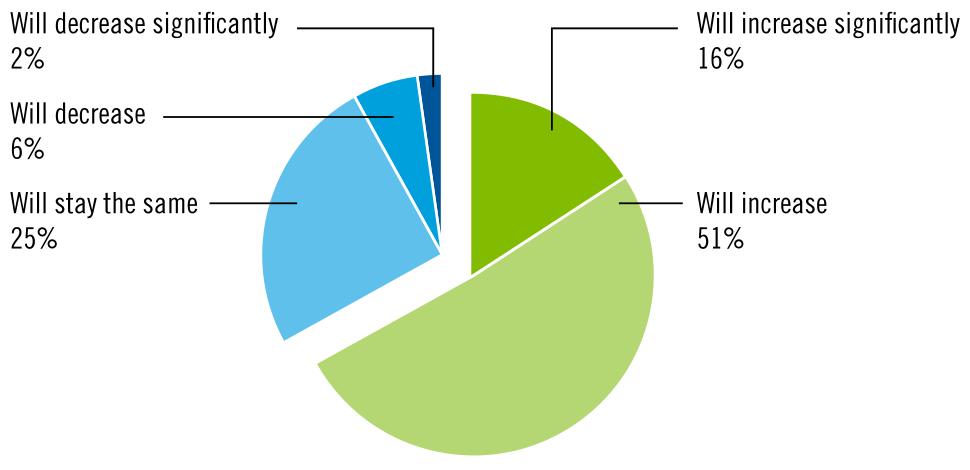
In response to current liquid credit yields, investors have been increasing allocations (Exhibit A) to global private debt markets to offset the income losses across their credit portfolios and take advantage of capital appreciation opportunities that have emerged.
To understand the opportunities in private credit, it is valuable to understand the structural changes that have allowed private credit markets to flourish, particularly in the Unites States.
With higher yields hard to find elsewhere, two thirds of investors surveyed intend to increase investment in private credit.
Exhibit A: How Surveyed Investors Plan to Allocate to Private Debt by 2025
Source: Preqin Investor Survey August 2020.
2008: The Rise of Non-bank US Middle Market
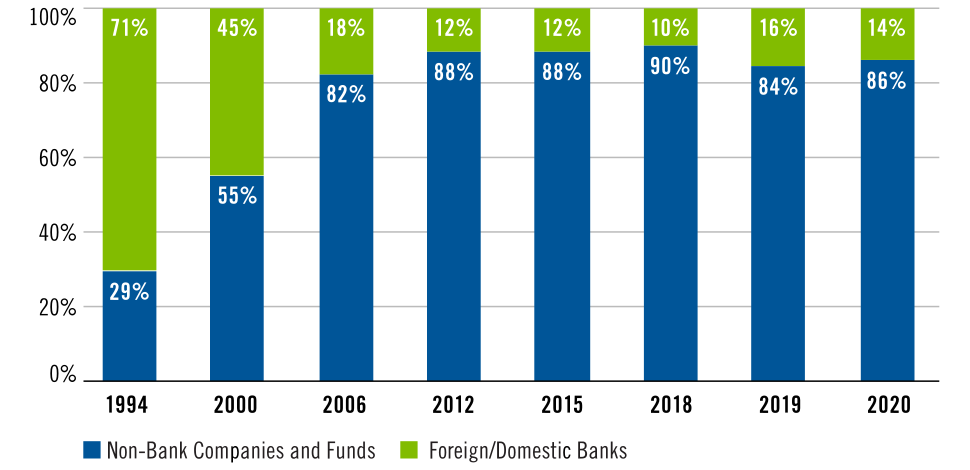
Following the 2008 financial crisis and the implementation of Basel III and US Federal Reserve regulation relating to bank lending, US banks have steadily reduced their exposure to small and mid-size enterprises (SMEs) while shifting their focus towards investment grade corporate issuance. The resulting void in lending markets across SME businesses was filled by non-bank financial institutions and investment funds that provide vital funding to these institutions while also generating attractive investment returns over bank-sponsored credit (Exhibit B).
“The US middle market is a critical sector of the American economy and an important engine of job creation accounting for the majority of new US jobs since 2008 and 27% of US annual income. Remarkably, 75% of companies in the middle market category have been in business over 20 years.”
Exhibit B: Relationship between Bank and Non-bank Lending for Leveraged Loans
Source: S&P LCD Leveraged Lending Review Q4 2020
Private Debt Financing Plugs the Gap in the US Middle Market in Covid-19 Era
As 2020 unfolded attention was drawn to prospects in the US middle market where bank lending became severely constricted and private debt opportunities emerged. The US middle market is comprised of companies that generate between USD 10 million and USD 1 billion in revenue per company per annum, representing 200,000 US businesses. Embodying USD 9.3 trillion in annual revenue and 52 million employees, the sector is commonly referred to as ‘the market that moves America.’ The US middle market is a critical sector of the American economy and an important engine of job creation accounting for the majority of new US jobs since 2008 and 27% of US annual income. Remarkably, 75% of companies in the middle market category have been in business over 20 years3.
US middle market companies suffered significant revenue impact because of COVID-19 and were initially supported by select government relief programs that provided incremental liquidity to American businesses, taking the form of both direct funding facilities (Payment Protection Program) and indirect programs utilising banks and savings and loan institutions as lending conduits to main street businesses. While these programs provided a lifeline to countless US businesses, many businesses did not qualify or declined these programs due to restrictive loan covenants and instead sought capital from private capital providers.
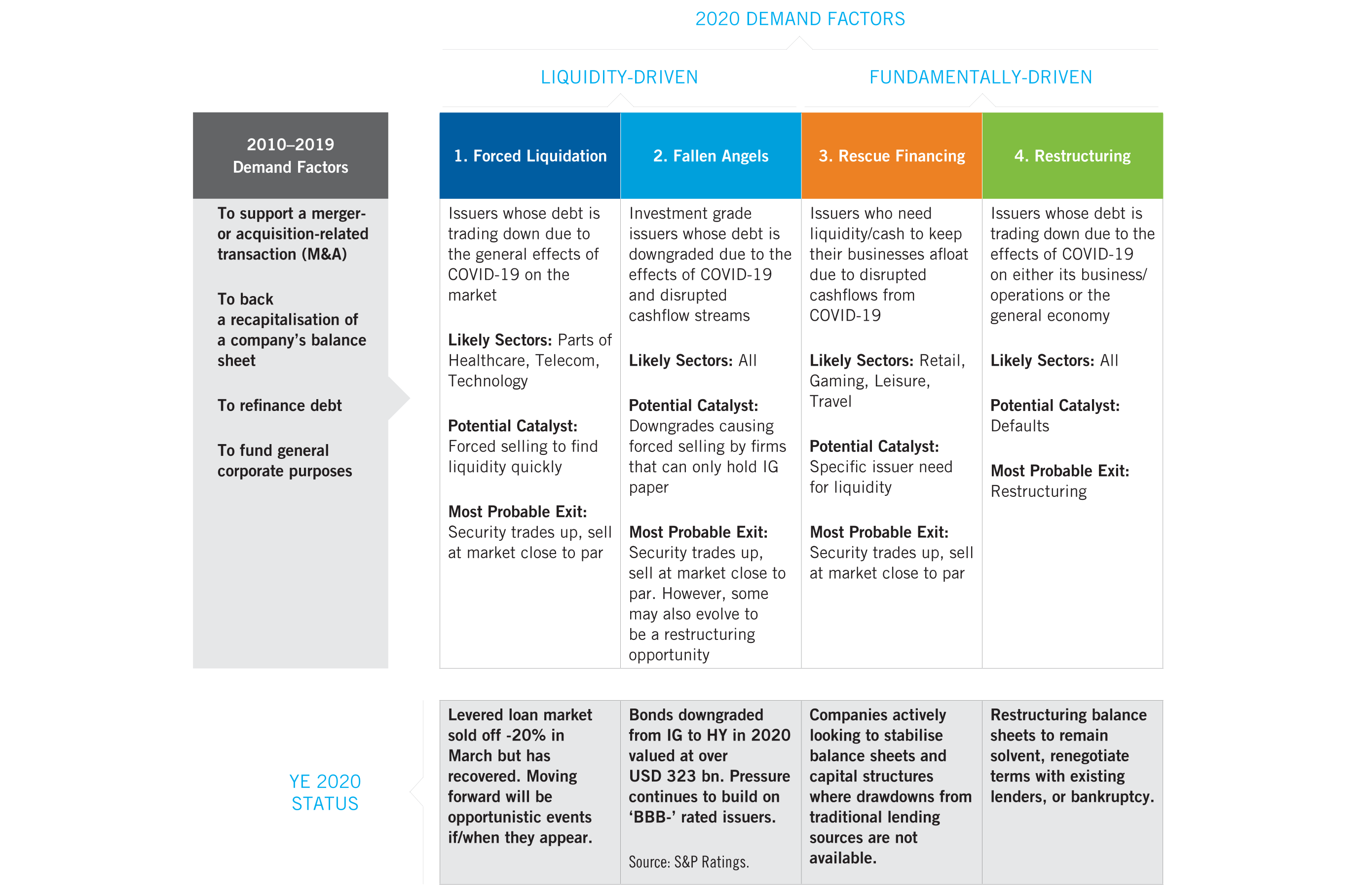
The dramatic realignment of middle market borrowing factors in the US markets resulting from the pandemic moved from traditional demand factors, being financing for M&A activity, recapitalisation of corporate balance sheets, debt refinancing and general corporate purposes, to a bifurcated market defined as liquidity-driven and fundamentally-driven demand (Exhibit C).
Exhibit C: Covid-19 Impact on Private Markets
Dramatic Realignment of Borrowing Demand
Source: Franklin Templeton.
“As markets emerge from the pandemic, investors are likely to remain faced with highly accommodative central bank policies that are likely to constrain liquid credit market yields, suggesting that private debt strategies may offer an attractive supplement to their traditional credit portfolios.”
Liquidity Concerns Reset Private Debt Lending Terms, Transferring Pricing Power to the Lender
As private market debt demand rose throughout 2020, the requirements for borrowers changed considerably. Concerned about liquidity constraints like those experienced during the global financial crisis, many corporates drew down revolving credit lines quickly. Private debt managers focused on sustaining the capital requirements of their portfolio companies by offering short term bridge-financing or renegotiating payment schedules to reduce the burden on corporate balance sheets. Funding requirements varied across industries, with telecoms, IT infrastructure and business services rebounding quickly while retail, gaming, leisure, and travel sectors continue to see revenues impacted by the pandemic.
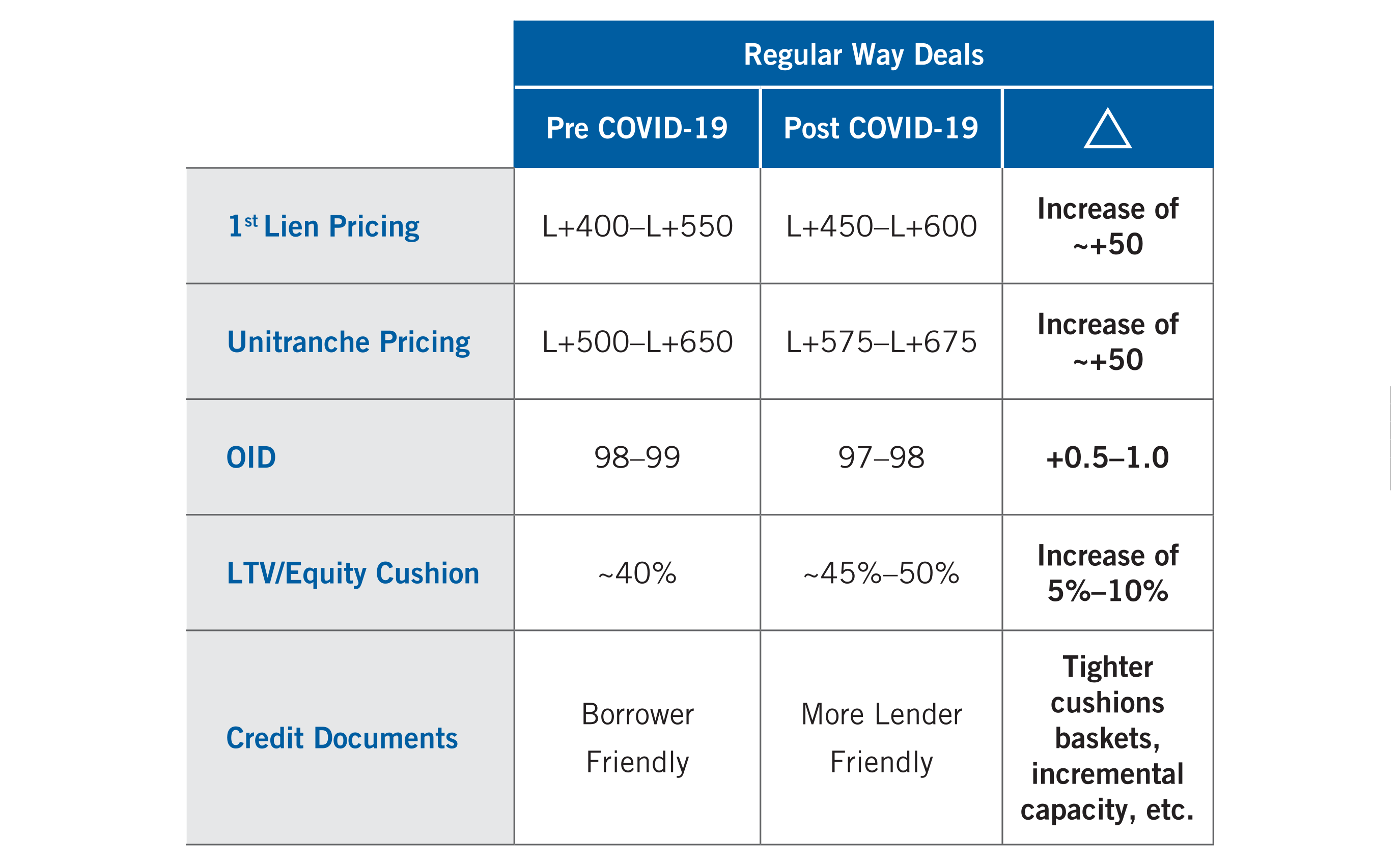
As a result, private debt lenders saw middle market lending terms reset as the pandemic unfolded with increases across pricing (first lien and unitranch), original issue discounts and equity cushions, as well as tighter credit documentation (Exhibit D).
Exhibit D: Private Middle Market Terms Have Reset
Note: Views expressed are those of Franklin Templeton.
Source: Franklin Templeton; SPP Capital Survey from Leveraged Commentary and Dara (LCD) article entitled: “Private Lenders Look Past Shutdown for Clues About New Landscape” dated April 16, 2020.
Private Debt’s Role in Investment Portfolio
As markets emerge from the pandemic, investors are likely to remain faced with highly accommodative central bank policies that are likely to constrain liquid credit market yields, suggesting that private debt strategies may offer an attractive supplement to their traditional credit portfolios. The forms of these returns are represented by the current illiquidity premium (additional income derived from surrendering the optionality of liquidating the position on demand) currently available in private debt markets, the consistent requirement for capital across US middle market corporates (USD 462 billion of middle market loan maturities over 6 years4) and increasing M&A activity introduced by improving economic fundamentals post-COVID-19.
Private debt may play an increasingly important role in investor portfolios through the introduction of diversification and a risk-adjusted sources of long-term income. Analysis over a 10-year period ending in Q3 2020 revealed direct lending strategies outperformed levered loans and high yield with lower overall volatility5.
While credit losses have been in line with levered loans and high yield over the same period, manager selection is an important criterion to ensure that risk/return outcomes remain attractive. Private debt managers with a history of disciplined loan structuring and underwriting, in combination with a deep network of sponsored and non-sponsored deal sourcing remains a significant competitive advantage in this increasingly valuable sector.
ENDNOTES:
-
Source: Reuters, “Global Dividends forecast to inch back from coronavirus cliff edge,” November 23, 2020
-
Source: Willis Towers Watson: Thinking Ahead Institute, Global Pension Assets Study 2020.
-
Source: Investopedia.
-
Source: Refinitiv: “Middle Market 2Q20 Review,” Middle market is defined as issuers with revenues of USD 500 million and below and a total loan package of USD 500 million and below.
-
Source: Cliffwater Research, S&P/LSTA Leveraged Loan Index, Bloomberg Barclays US Corporate High Yield Index as of September 30, 2020, Morgan Stanley Wealth Management GIC.
WHAT ARE THE RISKS?
This document is for information only and does not constitute investment advice or a recommendation and was prepared without regard to the specific objectives, financial situation or needs of any particular person who may receive it and does not constitute legal or tax advice. This document may not be reproduced, distributed, or published without prior written permission from Franklin Templeton.
Any research and analysis contained in this document has been procured by Franklin Templeton for its own purposes and may be acted upon in that connection and, as such, is provided to you incidentally. Data from third party sources may have been used in the preparation of this document and Franklin Templeton has not independently verified, validated, or audited such data. Although information has been obtained from sources that Franklin Templeton believes to be reliable, no guarantee can be given as to its accuracy and such information may be incomplete or condensed and may be subject to change at any time without notice. Any views expressed are the views of the portfolio manager as of the date of this document and do not constitute investment advice. The underlying assumptions and these views are subject to change based on market and other conditions and may differ from other portfolio managers or of the firm as a whole. The mention of any individual securities should neither constitute nor be construed as a recommendation to purchase, hold, or sell any securities, and the information provided regarding such individual securities (if any) is not a sufficient basis upon which to make an investment decision. The information provided in this material is not intended as a complete analysis of every material fact regarding any country, region, or market. There is no assurance that any prediction, projection or forecast on the economy, stock market, bond market or the economic trends of the markets will be realized. Franklin Templeton accepts no liability whatsoever for any direct or indirect consequential loss arising from the use of any information, opinion or estimate herein and reliance upon the comments, opinions, and analyses in the document is at the sole discretion of the user.
The value of investments and the income from them can go down as well as up and you may not get back the full amount that you invested. Past performance is not necessarily indicative nor a guarantee of future performance.
Products, services, and information may not be available in all jurisdictions and may be offered by other Franklin Templeton affiliates and/or their distributors as local laws and regulation permits. Please consult your own professional adviser for further information on availability of products and services in your jurisdiction. This is not an offer to sell or a solicitation of an offer to purchase securities in any jurisdiction where it would be illegal to do so.
To understand the opportunities in private credit, it is valuable to understand the structural changes that have allowed private credit markets to flourish, particularly in the Unites States.