
CONTRIBUTORS

Peter Sartori
Executive Vice President, Director of Portfolio Management

Alan Chua, CFA
Executive Vice President, Portfolio Manager/Research Analyst
The world today isn’t the one that we knew before the pandemic. We have entered an era where, unless Value is reimagined, there is a risk of being obsolete. That challenges the Templeton Global Equity Group (TGEG) to take a more versatile approach of thinking about Value than simply relying on accounting metrics to determine what’s “cheap”.
We believe the world has entered an era where Value needs to be reimagined and enhanced, rather than relying on accounting metrics to determine what’s ‘cheap’.
Enduring value
Making the case for long-term Value equities today
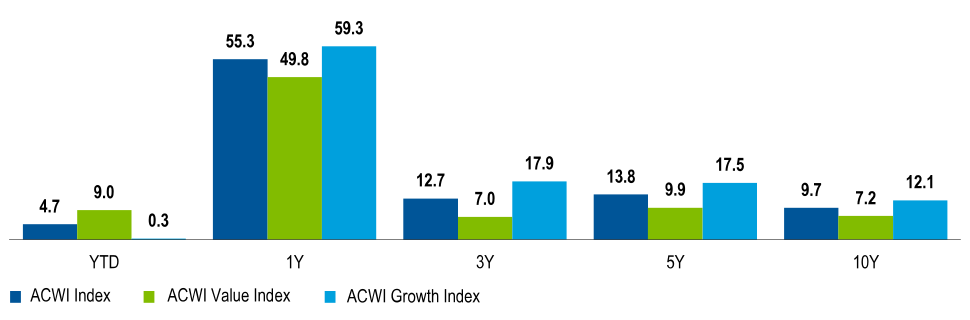
Against a backdrop of rising yields, highly accommodative government measures and valuations concerns, global equities continued to gain in 2021. The first quarter of the year saw Developed Market (DM) equities outperform Emerging Market (EM) equities with the U.S. once again leading DM gains. However, style wise, there was a noticeable shift in investor preference away from growth stocks into Value and cyclical names after a torrid decade where Growth handsomely trounced Value (Chart 1).
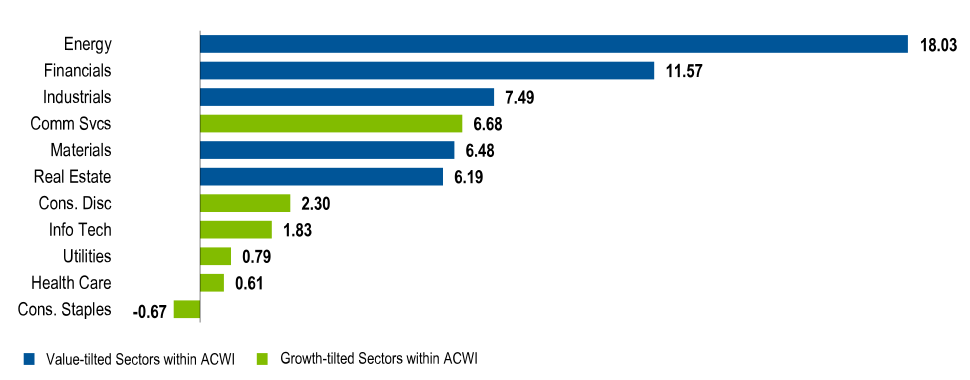
The rotation was also obvious from a sector perspective. Within the MSCI ACWI Index, sector leadership swung from technology, communications services and consumer discretionary to areas more sensitive to an uptick in economic activity such as financials, industrials, materials and energy (Chart 2).
Chart 1: Value has taken leadership in 2021 (% returns in USD)
Source: Bloomberg, MSCI. Data as of 31 March 2021. All returns in USD.
Chart 2: Value rotation in global sectors (% returns in USD)
Year to Date ACWI Sector Returns (%)
Source: Bloomberg, MSCI. Data as of 31 March 2021. All returns in USD.
In hindsight, investors can now see that the rotation into Value really began about a year ago in the depths of the pandemic-induced market turmoil. Arising from those ashes was an uncanny confluence of factors for this great style rotation which may have more stamina than previous Value revivals.
The inflation expectation
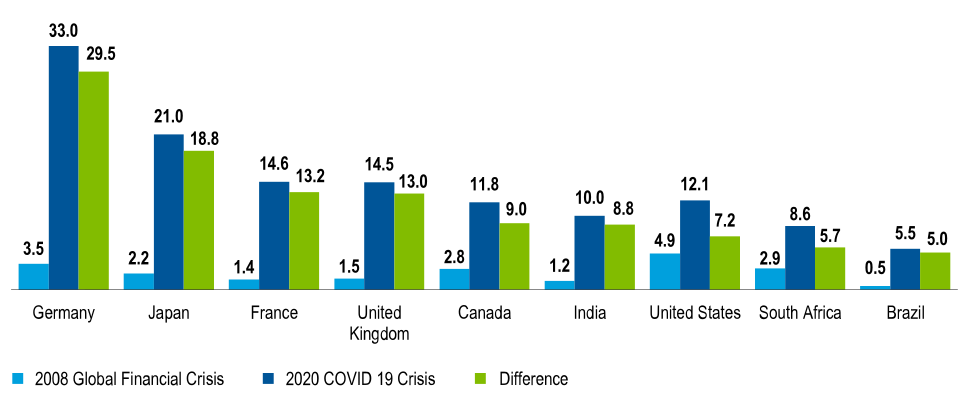
The main catalyst for inflation and probably the starkest is the unprecedented policy stimulus from both the monetary and fiscal fronts. In many parts of the world, governments were attuned to the economic impact of the impending global lockdown and put in place coordinated measures above and beyond what was set aside for the 2008 Global Financial Crisis (GFC) (Chart 3).
Chart 3: Stimulus for COVID-19 was coordinated and beyond the 2008 GFC (% of GDP)
Source: McKinsey & Company, June 2020. Percentages based on 2019 GDP. Global Financial Crisis' data drawn from International Monetary Fund (including discretionary spending) 2008 to 2010. The state of public finances: Outlook and medium-term policies after the 2008 crisis, IMF, March 2009. For illustrations purposes only.
The stimulus and relief measures not only sustained businesses and households during the Great Lockdown but also resulted in pent up demand for goods, services, and all-round economic activity. The global pandemic not only mobilised governments to support their economies in tandem but also engaged the private sector to produce vaccines in record time.
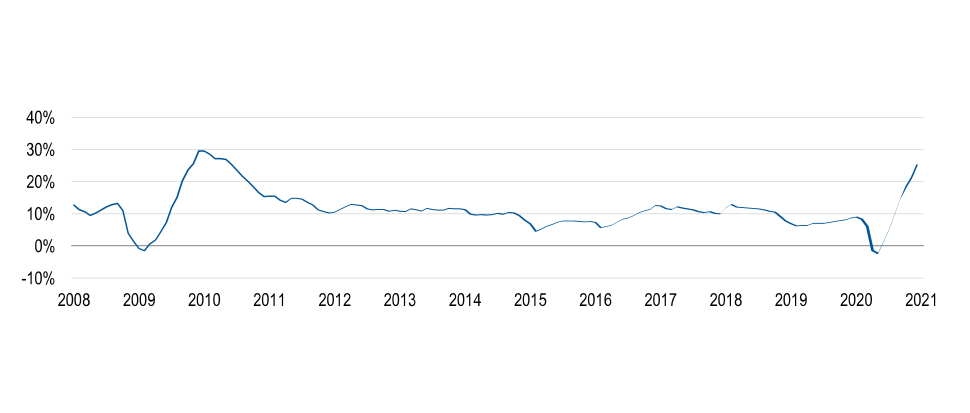
As of mid-April 2021, the World Health Organization estimates that there are 275 vaccines in preclinical and clinical development and 11 vaccines being used globally1. At present, over 919 million vaccine doses have been administered worldwide, equivalent to 12 doses per 100 people2. While the vaccine rollout is uneven across the world, authorities are on the front foot with the objective of achieving herd immunity as soon as possible. This impetus has driven a push towards normalisation in the global economy as see by sharp recoveries in economic activity (Chart 4) and rising earnings estimates (Chart 5).
This increase of actual economic activity and projected earnings have created a growing expectation for inflation to return.
Chart 4: Manufacturing PMI index (as of 30 April 2021)
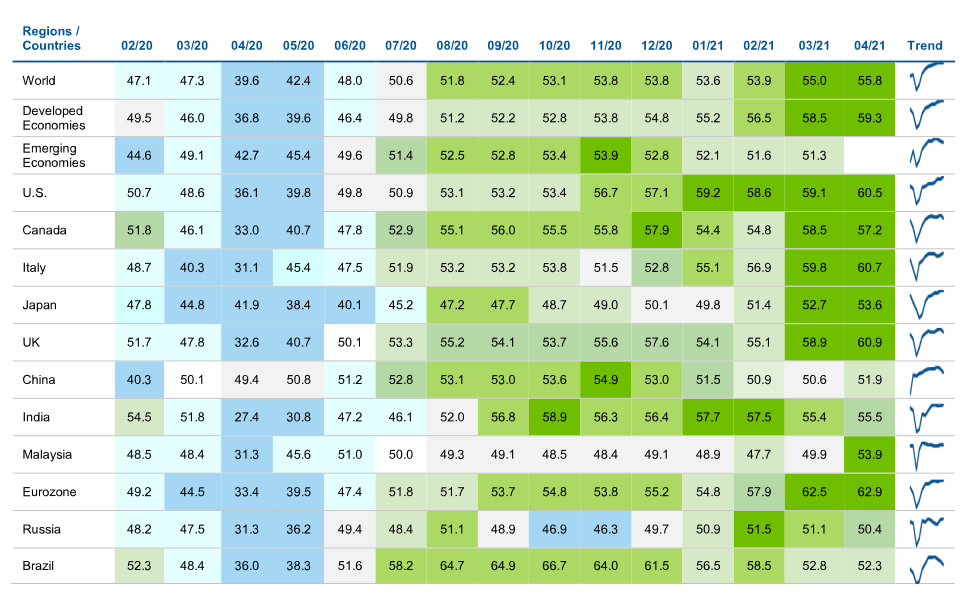
Source: FactSet, Markit. Slide created by Franklin Templeton’s Global Research Library. Important data provider notices and terms available at www.franklintempletondatasources.com. Note: Green (>50) represents an expansionary stage, and blue (<50) represents a contraction stage in manufacturing sector. For illustrations purposes only.
Chart 5: Global earnings growth expectation (MSCI ACWI)
Source: Franklin Templeton Capital Market Insights Group, MSCI, Macrobond, 31 December 2020. For illustrations purposes only.
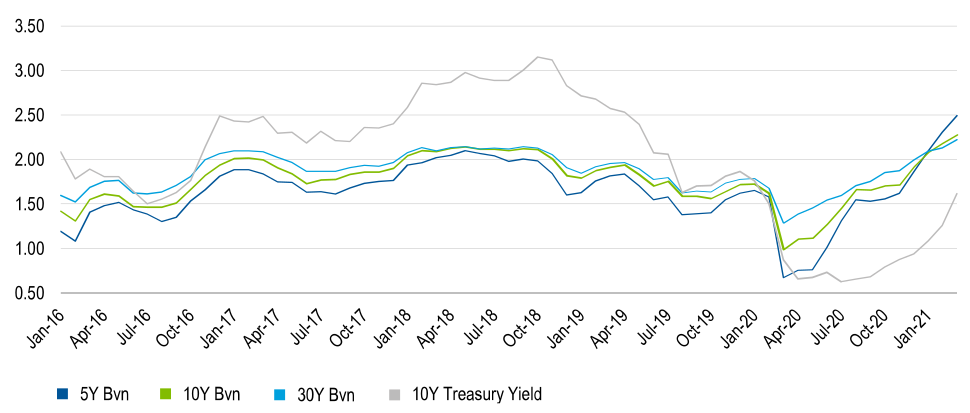
The US Fed and central banks around the world are keen to maintain a low interest rate narrative in hopes of stimulating inflation and recent data suggests that inflation might well be on its way back. Driven by rising expectations, the 5,10 and 30-Year US breakeven inflation rates have been on a tear lately, backing up to levels not seen for a long time while 10-Year US Treasury yield, the pricing barometer on many financial assets, have also risen in tandem (Chart 6).
Chart 6: Breakeven inflation rate and 10Y yields suggest that investors are expecting inflation at a rapid pace (%)
Source: Federal Reserve Bank of St. Louis, Economic Research Division. Data drawn via FRED on 21 April 2021. For illustrations purposes only.
Tailwinds for value
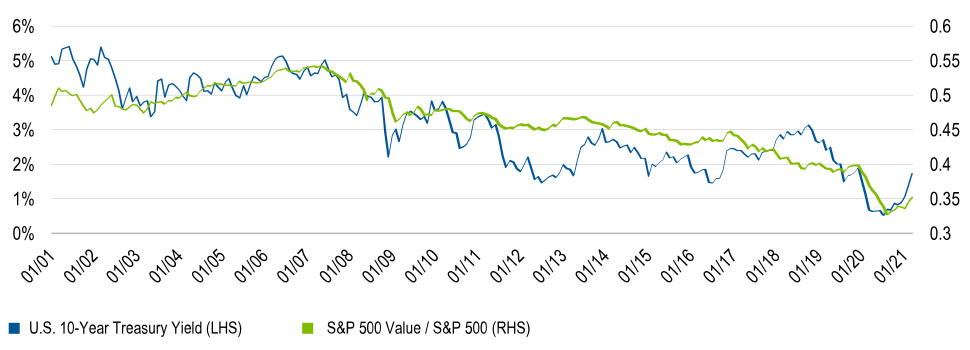
The fact that inflation is beckoning, and yields are backing up the way they are, is a boon for Value investors. The initial revenue concerns about rising borrowing costs and higher overheads are more than superseded by the benefits of rising volume and pricing power that comes in a robust economy. Thus, the relationship between the economy-sensitive value stocks, inflation and rising yields is one that is in lockstep; with history showing how closely the three move together (Chart 7).
Chart 7: A historically strong correlation between yields and value stocks
Source: FactSet, S&P Dow Jones Indices, Tullett Prebon Information. Slide created by Franklin Templeton’s Global Research Library. Data as of 31 March 2021. For illustrations purposes only.
The current inflation situation is different from 2013 and 2016 (the last couple occasions yield spiked). Firstly, the size of global stimulus, both monetary and fiscal have combined to produce liquidity at an unprecedented level.
Secondly, the 2020 recession could be viewed as a natural disaster, not a standard financial or economic recession, so the economic rebound has been rapid rather than protracted over a longer period.
Thirdly, this surge in economic activity has coincided with a period of supply constraints such as shortage of computer chips, demand for metals and growing need for agricultural products. Inflation this time around could be more persistent and we see that in the back up of yields.
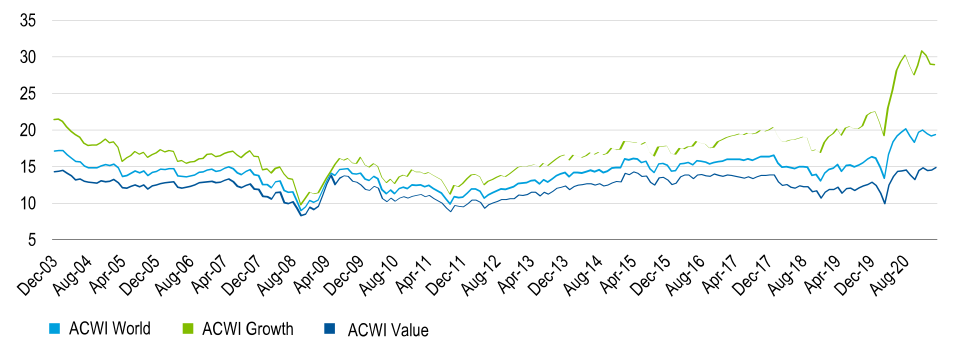
Another tailwind for value stocks is its starting valuation. While Value has had a mini run over the last one year, its valuations are not even close to the astronomical prices that investors must fork out for growth stocks (Chart 8).
The last decade of outperformance by Growth has greatly inflated the differential between these two styles and we believe that investors could benefit as the gap between Growth and Value compresses.
Chart 8: Value is starting at more attractive valuations (MSCI ACWI 12 months forward Price to Earnings ratio)
Source: Citi Research, Datastream, MSCI. Data as of 31 March 2021. For illustrations purposes only.
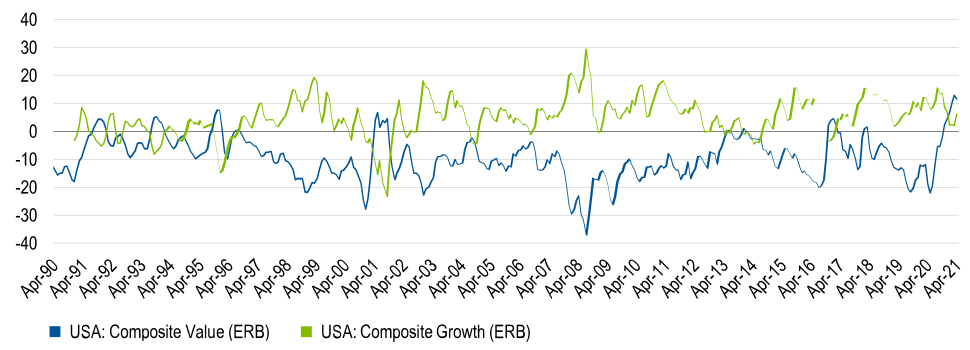
Rising inflation expectations, growing yields and a supercharged economy has resulted in earnings of value companies (as indicated by the blue line in Chart 9) being revised steeply upwards. Growth earnings (green line) on the other hand, are being revised downwards. It is also interesting to note that earnings revisions for value stocks are at its highest since 1990. The earnings momentum is undeniably with value stocks.
Chart 9: Earnings revisions are favouring Value
Source: Factset, MSCI, Bernstein analysis. Latest estimate for 30 April 2021. For illustrations purposes only.
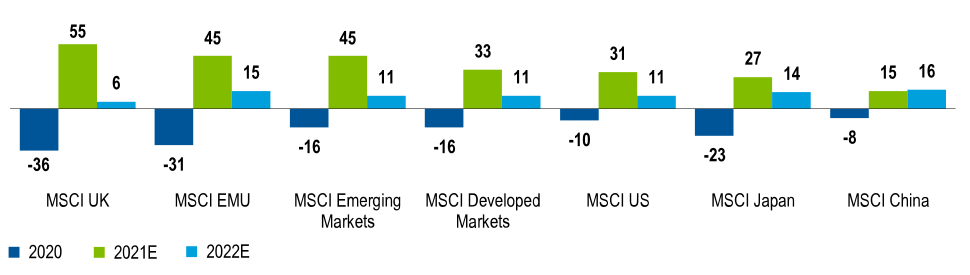
From a country perspective, earnings are expected to recover more over the next two years, primarily in cyclical/value markets of the United Kingdom, Europe, and Emerging Markets than in the United States (Chart 10).
Chart 10: Cyclicals-heavy UK, Europe and the Emerging Markets look to grow earnings faster
Source: FactSet, MSCI, FactSet Market Aggregates. Data drawn on 5 May 2021. MSCI makes no warranties and shall have no liability with respect to any MSCI data reproduced herein. No further redistribution or use is permitted. This report is not prepared or endorsed by MSCI.
Putting the above together, the current opportunity of Value is irrefutable. The top-down and bottom-up evidence presents a truly tactical opportunity for strategic positioning. However, while the data above presents a compelling case for Value, investors must be cognisant that the rotation, whilst early, has begun. And although Value might seem attractive as a whole, active management will be critical to separate the wheat from the chaff, unlocking latent alpha.
Re-thinking value: the templeton global equity group difference
The Templeton Global Equity Group (TGEG) believes that the world has entered an era where unless Value is reimagined and enhanced, there is a risk of being obsolete. At the core, TGEG’s approach to Value comes from Sir John Templeton. “Remain flexible and open-minded about types of investment,” he wrote.
“There are times to buy blue chip stocks, cyclical stocks, corporate bonds, US Treasury instruments, and so on. And there are times to sit on cash … The fact is that there is no one kind of investment that is always best”
Today, we term this approach “Compound Value”, because like a chemical compound, it results from the union of multiple elements including;
- Price – the cost of a share in earnings, cash flow and assets,
- Quality – predictability, variability and risks associated with fundamentals,
- Growth – both the rate of change and its sustainability/duration, and
- Event – tangible, fundamental and probable change likely to unlock Value.
There is no single formula for a great investment, but Value opportunities often share key drivers. At TGEG, we have identified five different “types of Value”.

This framework helps us focus on what matters while also encouraging a diversity of investment ideas. It emphasises price discipline and promotes accountability and intellectual honesty in our process. It also helps us better understand how portfolios are structured and likely sensitivities to different macro environments and outcomes.
In short, it creates a more versatile and dynamic approach of thinking about Value than simply relying on accounting metrics to determine what’s “cheap.” It is a way of ensuring that the key attributes of Sir John Templeton’s approach
– open-mindedness, discipline, flexibility, and forward thinking – are encapsulated in the work we do today.
Tgeg’s value framework: perfect foresight fy6 p/e
At TGEG, we use many methods to ascertain Value, but one ex-ante metric that we assign to all our holdings is FY6 P/E which is the current price divided by our forecast of earnings in fiscal year 6.
Similarly, we can perform an ex-post assessment of market valuations by dividing, say, 2014 prices by actual, realised 2019 operating earnings. We call this “Perfect Foresight FY6 P/E”.
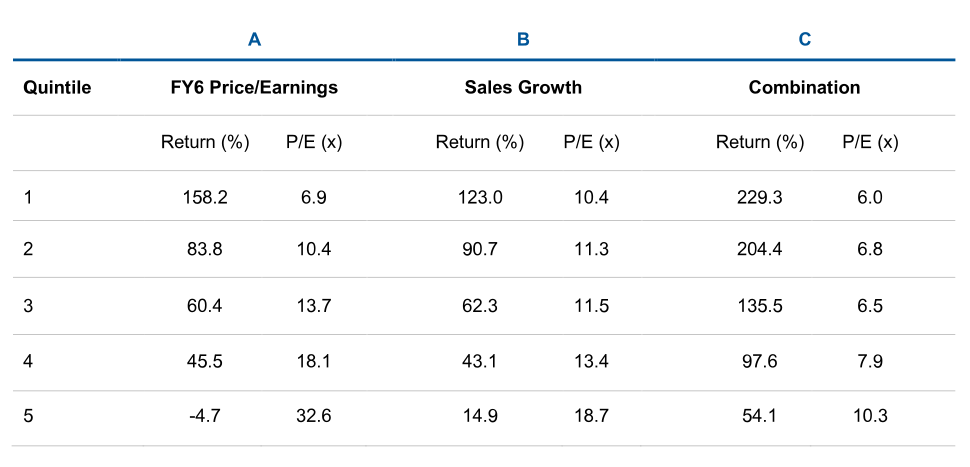
The table below (Chart 11) uses this framework to show the cumulative returns of different groupings in the 2014-2019 timeframe.
Column A divides the MSCI World Index into quintiles based on “perfect foresight FY6 P/E” (with Q1 being the cheapest 20% of stocks on this metric and Q5 the most expensive). The good news is that our focus on the FY6 P/E is validated by the performance. The cheapest quintile of stocks generated a return of 158.2% over the period analysed, whereas the most expensive returned
-4.7%. Returns decline from the cheapest to the most expensive exactly as we would expect, “proving” that Value investing with perfect foresight works.
Column B orders the index constituents not by perfect foresight P/E, but rather by their sales growth over the 2014-2019 period, with Q1 being the 20% of the market with the highest sales growth and Q5 the 20% with the lowest. The results show we could also have performed very well over the period analysed by ignoring valuation completely and simply focusing on which companies were set to grow sales at the fastest rate.
Column C is still ranked Q1-Q5 by sales growth, but the returns are the performance of the cheapest quintile (on perfect foresight FY6 P/E) of each sales growth quintile. Returns were significantly better than looking at either the perfect foresight FY6 PE quintiles or the sales growth quintiles independently.
Chart 11: “Perfect Foresight” FY6 P/E and Sales Growth Quintiles (MSCI World Index, 2014-2019)
Source: Templeton Global Equity Group, 31 March 2021. Data from 1 Jan 2014 to 31 Dec 2019. Returns in USD. For illustrations purposes only.
This analysis clearly shows that Value investing does not mean buying low growth companies. The FY6 PE of the top quintile Combination portfolio above was just 6x. With the benefit of hindsight, no investor could dispute that these stocks were value stocks.
The truth is markets sometimes offer more “value” in stocks that depend on longer-term earnings growth whilst at other times the market underprices companies with relatively low growth. Over the last decade low interest rates promoted an environment in which strong sales growth could be funded cheaply and turned into profits. So many “Growth” companies could have been classified as “Value”.
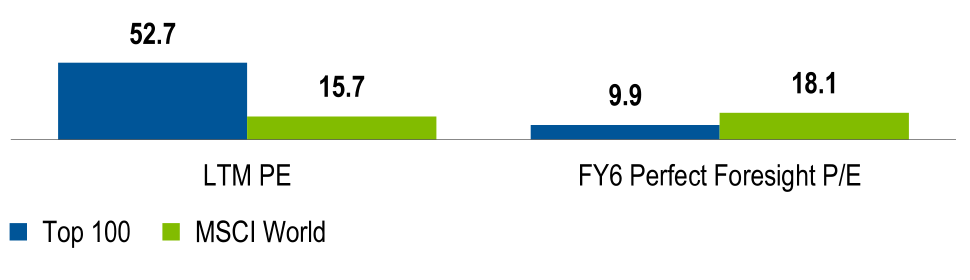
A similar exercise helps expose the pitfalls of relying too heavily on formulaic conceptions of “Growth” and “Value.” In this study, we isolated the top 100 performing stocks in the MSCI World over the six years ended 31 December 2019 (Chart 12). At the beginning of 2014, the 100 stocks that would go on to deliver the highest total returns over the next six years had an average trailing P/E of 52.7x (first blue bar on right-hand chart).
Trading at more than 3x the broader market, these were certainly not “bargains” by the traditional Value investor’s yardstick of backwards-looking earnings multiples. However, when we compare 2014 prices to 2019 realised EPS, we can see that these stocks traded at just 9.9x “perfect foresight” earnings, a nearly 50% discount to the benchmark’s 18.1x perfect foresight multiple.
Chart 12: P/Es of Top 100 Stocks vs. MSCI World (2014-2019)
Source: Templeton Global Equity Group, 31 March 2021. Data from 1 Jan 2014 to 31 Dec 2019. Returns in USD. For illustrations purposes only.
Only an investor looking further ahead and thinking more creatively about how to forecast and price growth would have been in the right position to identify these types of stocks and realise just how cheap they were.
Aim for diversified value
Thinking about how different elements combine to create value moves us away from linear assumptions of value accretion. In the linear sense, cheaper valuations and higher growth rates are preferable because they create more runway, respectively, at the beginning (cost basis) and end (terminal value) of an investment. However, we discovered that combining these elements creates a more exponential compounding effect, and that is what we try to do at the portfolio level with our focus on balance and diversification across different themes, exposures, and characteristics.
Therefore, we view “Value” as much more than the Value factor, and why we believe it is important to maintain diversification across “types of Value”. We aim to own both companies that are cheap because they will deliver strong earnings growth and others that are cheap even with low growth. We believe a portfolio that is diversified across different types of Value stocks will be more resilient over time and less dependent on macro risk factors that are very difficult to predict. The key is good business analysis, and, at TGEG, that is our focus.
A positive impact
The re-energised framework has galvanised TGEG’s Global Equity strategy. Using the pandemic-induced global stock rout in the second quarter of 2020, the team was able to begin selectively scooping up mispriced names in consumer discretionary, communication services, health care and materials which were identified using the new framework.
As a result, over 2020, consumer discretionary moved to an overweight, the underweight in information technology was reduced, energy shifted from an overweight to back in line with the benchmark and health care holdings decreased.
More specifically, within consumer discretionary, a barbell approached was utilised. On the one hand, we have increased exposure to select retailers and travel/hospitality companies that appear oversold and are likely to survive a protracted period of economic weakness. On the other, we have also initiated positions in some of the world’s highest quality, best-known consumer brands.
Within information technology, we have largely avoided the expensive internet stocks vulnerable to a change in sentiment or regulation and instead found opportunities among select software companies, hardware companies with restructuring and business mix transition potential, and semiconductor manufacturers exposed to long-term growth trends tied to digitalisation, energy efficiency and electric vehicles.
Region-wise, the overweight to Asia was increased with Japan as the main beneficiary of our stock selections (see “Why we like Japan” below). While still overweight Europe, the allocation has decreased from a year earlier reflecting lesser positions in financials and energy. That said, the underweight in the U.S. was also decreased on the increased allocation to information technology.
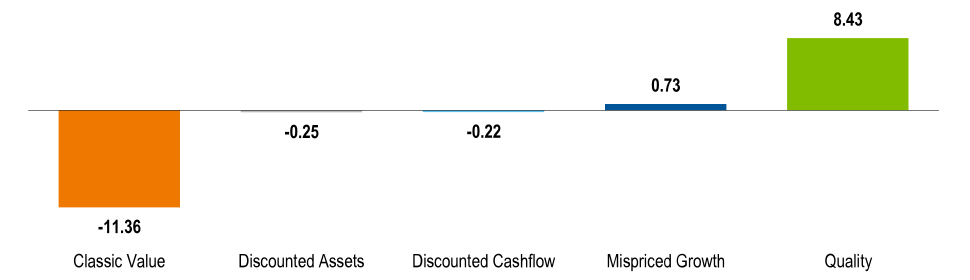
From a Value-sleeve perspective, the change has also been obvious. Chart 13 show the reduction of “Classic Value” holdings and an increase of “Quality Value” names. Clients need to be aware that this allocation within the five Value sleeves is a result of bottom-up stock selection. We think that this mix will continue to evolve as the market presents us with a wider set of Value opportunities.
Chart 13: The allocation of the five Value sleeves (change in sleeve % since December 2019)
Source: Templeton Global Equity Group, 31 March 2021. For illustrations purposes only.
Why we like japan
Over the past 20 years, Japan’s correlation to the MSCI World Index has been relatively low and at times even negative, a helpful characteristic when it comes to portfolio construction.
We like the fundamental case for Japanese equities. Abenomics has encouraged genuine reform, including accommodative monetary policy, lower corporate tax rates, deregulation, corporate governance reforms and greater openness to trade and immigration. These are likely to continue under the current Prime Minister Yoshihide Suga, who, if anything, is thought to be even more market-friendly than his predecessor.
Just as important, we think there continues to be bottom-up opportunities in the market, as many companies still look relatively cheap to us and offer an interesting combination of defensive characteristics (diverse revenues and cash-rich balance sheets) as well as exposure to high-growth end-markets like China and industries like technology and automation.
Going forward, we also see how some Japanese companies may offer good inflation protection given elevated commodity exposure and a stable base currency.
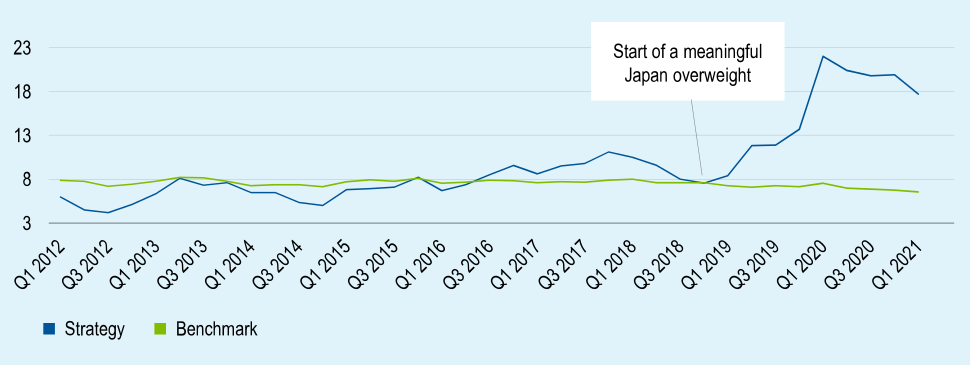
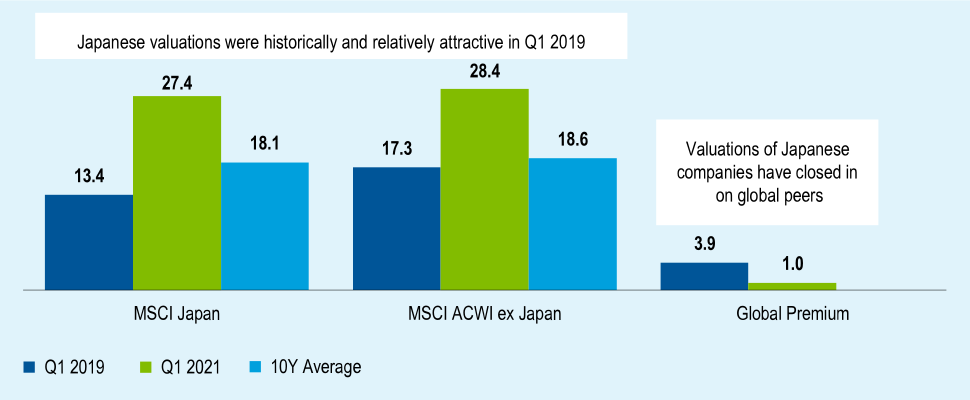
All the above led to our overweight position in Japan since Q1 2019 (Chart A). Since then, our decision has proven fruitful as relative valuations between Japan and the rest of the world have compressed materially from an initial spread of 3.9 in Q1 2019 to 1.0 in Q1 2021 (Chart B).
Chart A: Taking an overweight position in Japan in Q1 2019 (weight of Japan in TGEG Global Equity Strategy and benchmark %)
Source: Templeton Global Equity Group. Data as 31 March 2021. For illustrations purposes only.
Chart B: Japan has narrowed its valuation gap since Q1 2019 (LTM PE)
Source: Bloomberg. Data as 31 March 2021. For illustrations purposes only .
Paying off
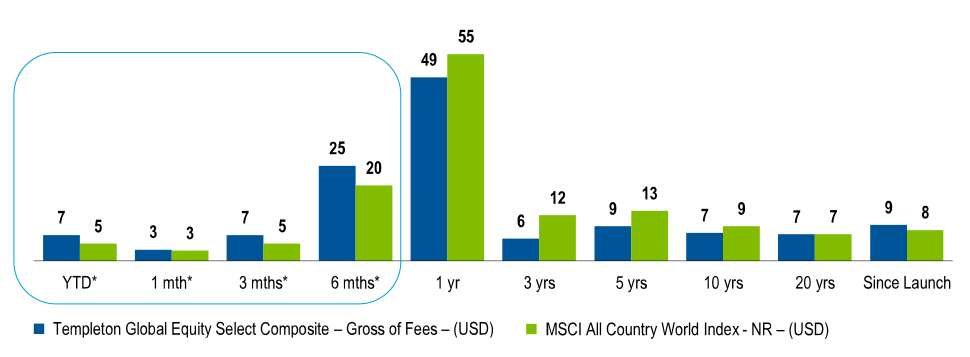
The sweeping repositioning of the Strategy has yielded good initial outcomes over the last months as Value began to gain momentum through the markets (Chart 14). The composite outperformed its benchmark index for the first quarter of 2021, driven by holdings in the information technology, industrials and energy sectors. We expect that stock picking will become more important in a broadly expensive valuation environment, and we were encouraged to see stock selection make a significant positive impact during the quarter.
Our assessment of the current market environment highlights a “double bubble” in both valuation and credit risk that is keeping us generally cautious on both tails of the market—the expensive leaders and the lower quality laggards.
In times like this we expect idiosyncratic opportunities to drive alpha in the portfolios, and we are increasingly focusing on special situations and event-driven opportunities, among other things. These are instances when the economic value of a business cannot be identified by standard valuation metrics because underlying business value is not solely a function of the present earnings or cash flow of the company given unique accounting treatment or the cyclical nature of the business.
Chart 14: Outperformance began 6 months ago (%)
Source: Templeton Global Equity Group, 31 March 2021. Returns in USD. For illustrations purposes only.
Testing but exciting times ahead
Going forward, rising interest rates, increasing inflationary pressures, and a stimulus-driven economic upturn are all reasons to believe that a rebound in the Value factor could have legs, but we are not putting all our eggs in one Value basket. Instead, we are looking to branch out across unique types of value stocks which will translate into strategy hardiness and less impacted by unpredictable external events.
We expect the market to become more discriminate. In contrast to much of the past decade, we anticipate an environment where fundamentals and nuance begin to matter again.
ENDNOTES
- COVID-19 Landscape of novel coronavirus candidate vaccine development worldwide. WHO, 20 April 2021.
(https://www.who.int/publications/m/item/draft-landscape-of-covid-19-candidate-vaccines) - Our world in data. Coronavirus (COVID-19) Vaccinations, 20 April 2021. (https://ourworldindata.org/covid-vaccinations)